Tuesday, July 19, 2022

Movies and PSYOP: The PRC is the Best!


While the picture here is from one of my favorite military satire sites, it, like most effective PSYOP, is based on truth. (see: https://bit.ly/3INygd3, which is also a photo source).


While the thrill of going to a darkened room with hundreds of strangers has been dampened due to COVID, there have been some exceptions. One of which has been “Top Gun: Maverick” which has topped over $1 Billion at the box office. 


The lure of movies as a propaganda medium has not been lost on other countries, in particular, the People’s Republic of China. Unbeknownst to me (because I let my subscription lapse) my favorite news magazine, The Economist published a January article “How Chinese propaganda films became watchable – Patriotic blockbusters are so entertaining people willingly buy tickets” (see: https://econ.st/3zgtUIi, another photo source).


The article talks about “The Battle at Lake Changjin” became the highest-grossing film in Chinese history, and the second-highest of the year worldwide. It made over $900m, just behind “Spider-Man: No Way Home”. You can watch the official trailer on YouTube at: https://bit.ly/3IXQnNy (another photo source) You can read a review in the British publication the Guardian at: https://bit.ly/3aUN50Y


I found it very interesting to learn that the film was especially popular among Young Chinese. This contrasts with Top Gun where the majority of viewers were over 35. (see: https://bit.ly/3v17JDm)


Stepping back, it would appear that the PRC is well aware its target audience. Clearly, their goal is to attract the younger citizen who is perhaps more disenchanted with the Chinese heavy surveillance efforts and potential censorship of internet news and other sites regarded as damaging to the Party and government.


Once upon a time, in World War II, one scholarly source summed up Hollywood’s role “During World War II, Hollywood produced films that acted as propaganda, increased military recruitment rates, assisted in military training, and boosted the morale of American soldiers and civilians alike, easily making cinema the most important form of popular media in the war effort.” (see: https://bit.ly/3B4pTYG)


The Office of War Information was created due to the need for offensive influence operations and under the pressure of World War II. Given the nature, resources and pressure created by Russia and other disinformation efforts – is it time to consider an Office of Disinformation Control?


Reader comments encouraged.

Monday, May 23, 2022

You Don’t Have to Like It


The 4th PSYOP Group (Fort Bragg, NC) created quite a hullaballoo with their May 2, 2022 recruiting video “Ghosts in the Machine” (which you can find at: https://bit.ly/3GeYEuX and is a photo source).

The video employs Koko the Clown, which first appeared in Out of the Ink Well from 1918 – 1929. You can learn more about him at: https://fleischer-studios.fandom.com/wiki/Koko_the_Clown

The Army Times shouted “ Foreboding Army PSYOPS recruitment video shows ‘who’s pulling the strings’” (https://bit.ly/3NrVtT6) According to the venerable ‘paper’, the film ‘gives off a slightly creepy surreal vibe’.  The Times picks up on the notion of ‘becoming the ghost puppeteer pulling the world’s strings, especially those of hot-button national security threats like the Chinese and Russian governments. The Times even goes so far as to say that the video’s real purpose “PSYOP aimed at an overseas audience.”

Another review – this one from boingboing.net said “Enjoy this creepy occult-ish U.S. Army Psychological Operations Recruitment video” (see: https://boingboing.net/2022/05/17/enjoy-this-creepy-occult-ish-u-s-army-psychological-operations-recruitment-video.html)

Even the ‘local’ Fort Bragg newspaper, the News & Observer chimed in saying “’Unsettling/ Fort Bragg recruitment video ignites debate over its mysterious intent’. (see: https://bit.ly/39NKHb9 which is a photo source as well).

As I reviewed the content, here’s what hit me:


·      The use of Sun Tzu – everyone’s favorite elegant strategist.

·      Implied that Psywarriors lead a life of adventure and intrigue.

·      Adopting the ‘Ghost’ as a branding tool – including the famed Ghost Army of WWII.

·      Arouse patriotism by showcasing potential peer enemies.

·      Concluding that information is everywhere and needs to be controlled as a weapon of war by a special breed of revitalized PSYWAR practitioners.

I did not see any nefarious plots nor occult visions. Rather it seemed to me that soldiers of the 4th POG thought pretty hard about the kind of colleague they want to attract and focused this latest work product as a way to appeal to those individuals and to influence them to apply for PSYOP selection.


If you’re sufficiently motivated to join PSYOP (we don’t use the s) you can check out the Army’s Official recruiting page at: https://bit.ly/3wGd6rH. According to our good friends at the Army Times if you make it, you may be eligible for reenlistment bonus packages of up to $21,000 for enlisted personnel, not to mention potential airborne and language pay and educational allowances.

The bottom line is not whether your like it or find it spooky – the measure of effectiveness is how many people are motivated to sign-up to become PSYOP soldiers.


Monday, April 18, 2022

American Psychological Association: The role of psychological warfare in the battle for Ukraine


Something a bit different today. Rather than analysis I am providing some highlights from a well respected academic and professional source – the American Psychological Association.


As an online instructor for American Military University and the Monterey College of Law I am often asked about ‘peer reviewed scholarly journals’ for students’ use in military intelligence and related subjects. Unfortunately and necessarily, much of the current subject matter is often classified so that there is a paucity of these sources.


One of my new sources, the SOF News showcased an article from the American Psychological Association (topic as in the headline) on April 11, 2022 which you can see at: https://bit.ly/3vqbhhO, which is also a photo source..


The article starts out by stating “at least 70 countries have engaged in coordinated online disinformation campaigns in recent years, with Russia alone launching more than 30 attacks on elections around the world since 2016 (2019 Global Inventory of Organised Social Media Manipulation (PDF, 6.05MB), University of Oxford; Hacking Democracies, Australian Strategic Policy Institute, 2019).”


Here some highlights:

“The Ukrainians are fighting a 21st-century war, which is half on the internet,” said Stephan Lewandowsky, PhD, a professor of psychology at the University of Bristol who studies misinformation at the societal level. “That new approach has worked extremely well because it has preempted Russian attempts to rewrite history.”


A “ploy Russian President Vladimir Putin has used to great success is conspiracy “gish gallop,” or rapid-fire lying, said Roozenbeek, for instance around the Malaysian Airlines disaster of 2014. The Kremlin’s constant stream of lies—that it was a Ukrainian attack, that all the passengers were dead before takeoff, that the pilot intentionally crashed the plane—is used to sow confusion and disillusionment (Paul, C., & Matthews, M., RAND Corporation (PDF, 177KB), 2016).”


Once it takes hold, misinformation is tough to correct. Psychologists have shown that prebunking, or preemptively warning people about incorrect or misleading information, is more effective than debunking falsehoods after the fact (Lewandowsky, S., et al., The Debunking Handbook 2020). Personal and emotional appeals, rather than merely providing a fact-check, can also be helpful.


The article also offers some suggestions on further reading in case you are interested:

LikeWar: The weaponization of social media
Singer, P. W., & Brooking, E. T., 2018

Controlling the spread of misinformation
APA, 2021

Putin, Zelenskyy, and Biden all have unique leadership styles
Hunter, S., & Scott Ligon, G., The Conversation, 2022

Misinformation, disinformation, and violent conflict: From Iraq and the “War on Terror” to future threats to peace.
Lewandowsky, S., et al., American Psychologist, 2013

Thursday, April 7, 2022

Shortwave Follow-up: Why the BBC’s Service Matters


On March 25, 2022 Rand published an article “Why the BBC World Service’s New Ukrainian Shortwave Service Matters” (see: https://bit.ly/3LPiFd4, which is also a photo source).


One of the reasons I think shortwave is under-rated is because most everyone else is focused on Social Media. While Social Media is important, it is not the be all and end all for communications and influence operations.


Social Media depends on Internet access. Remarkably (or perhaps intentionally) the Ukraine’s Internet remains intact at least as of 1540 Pacific Time on 7 April. For some background, check out this article: “Why is Ukraine’s Internet Still Up? Perhaps Because the Invaders Need It: at https://bit.ly/3NV92eH (another photo source)


However, it is abundantly clear that Russia has destroyed other aspects of the Ukrainian infrastructure and will do so when they feel it is in their bests interests. Destruction of infrastructure renders the internet impotent.

 Shortwave on the other hand, requires no major infrastructure and has proven its resiliency in times of disaster, peace and conflict.

The nub is that people have to want to listen and they need to know what frequencies to tune in and when to do so.


The BBC has a hard earned brand reputation and is no doubt proving to be an information lifeline.


The article concludes with a call to action: “Perhaps it's time for the United States to consider whether RFE/RL should return to its roots and follow the BBC's lead in restarting shortwave services to Ukraine and southeastern Russia.”


I would offer one of my one – should PSYOP get in the shortwave game? If so, would it make sense to specialize in a particular audience – say reinforcing the morale of those opposing the Russian invasion?


Reader input eagerly awaited.

Friday, March 4, 2022

When the new doesn’t work – try the old – BBC Resurrects Shortwave Radio


It is clear that Russia is pulling out all the stops in their invasion of Ukraine. Traditional and Internet Information sources have been prime targets.


In response to the damage done to these information vectors, the BBC is reviving its shortwave radio service in Ukraine and Russia.


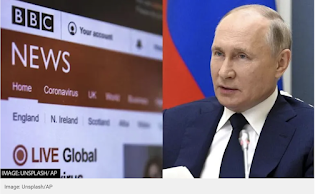
The March 3, 2022 online edition of the UK based Guardian feature an article: “BBC website ‘blocked’ in Russia as shortwave radio brought back to cover Ukraine war” (see: https://bit.ly/3sHC216, which is also a photo source.)


The article pointed to a third party source Globalcheck who reported that the BBC’s website was only at 17% of normal levels in Russia. Other articles can be found in the Around World Journal @ https://bit.ly/3CfvbiC, the India based Republicworld (https://bit.ly/3hFuDcm, also a photo source) and the NY Times @ https://nyti.ms/3pDfTiJ. You can also see a different take in “The History of Shortwave Radio in Fighting Propaganda” (@ https://bit.ly/3CeKgks)

The Guardian article also noted that “Shortwave radio uses frequencies that can travel long distances and are accessible on portable radios, making it the go-to method to reach listeners in conflict zones throughout history. Shortwave was used extensively in Europe to broadcast propaganda during the second world war, and usage peaked during the cold war. But as radio technology developed, along with the mass adoption of online news, shortwave fell out of favour around the world. After 76 years, the BBC World Service ended its shortwave broadcast to Europe in 2008.”

The NY Times added “Shortwave radio has been a go-to vehicle to reach listeners in conflict zones for decades, used to deliver crackling dispatches to soldiers in the Persian Gulf war, send codes to spies in North Korea and pontificate through the Iron Curtain during the Cold War. But more modern forms of radio along with the internet eventually pushed shortwave out of favor; the BBC retired its shortwave transmissions in Europe 14 years ago.”


If you want to learn more about shortwave radio, here are some resources:

  • 1.     What is shortwave radio? Radio Fidelity - https://bit.ly/3ILH1DE
  • 2.     If you want to listen to shortwave radio online – here’s how – Hamtronics - https://bit.ly/3HCuu45 which is also a photo source
  • 3.     If you would like to transmit shortwave radio messages from the US, you will need a FCC License. You can find great information on amateur (ham) radio at the National Association for Amateur Radio at: https://www.arrl.org/ham-radio-licenses


What does it mean to PSYOPers? Sometimes you need to understand history to use it against your enemies.


Wednesday, February 23, 2022

 Fake Videos – Effective PSYOP Weapons


With the Ukraine simmering and maybe boiling over, it seemed like the right time to address the role of Russia’s fake video efforts. Fox News offered “Russia, Ukraine ‘deepfake’ video, audio are concerns for US intelligence” (see: https://fxn.ws/3Iid4L0, which is a photo source).


FBI Cyber Division Unit Chief Pranav Shah told Fox News “the technology, once reserved for cyber wizards, is becoming more user-friendly. He says it is getting easier to make these digital deceptions, and they aren't always illegal. Several parodies of Tom Cruise and other actors exist online.”


A more entertaining report can be found with the UK Guardian: “Dumb and lazy’: the flawed films of Ukrainian ‘attacks’ made by Russia’s ‘fake factory’. (See: https://bit.ly/3BJbzDk, another photo source.) The lead for the Guardian Article expresses something that Fox missed:

Bellingcat founder Elliot Higgins says Russia’s propaganda films have got worse but that Russian viewers, especially the older generation, tend to believe fake TV footage.”


The real issue isn’t the quality of the Russian videos or whether crack US intelligence agencies can quickly determine that videos are fakes. The issue is simply: does the target audience believe the video and is it effective in changing their behavior in favor of Russia?


An interesting source on fake videos, etc. is https://www.bellingcat.com/. They describe themselves:

“Bellingcat is an independent international collective of researchers, investigators and citizen journalists using open source and social media investigation to probe a variety of subjects – from Mexican drug lords and crimes against humanity, to tracking the use of chemical weapons and conflicts worldwide. With staff and contributors in more than 20 countries around the world, we operate in a unique field where advanced technology, forensic research, journalism, investigations, transparency and accountability come together.” (Source: https://www.bellingcat.com/about/)


Elliot Higgins, the organization’s founder noted that “international audiences were mostly impervious to Kremlin disinformation. But he said domestic Russian viewers tended to believe fake TV footage, which was “theatrically” created for state propaganda purposes. This was especially true of the older generation”


It would appear that Mr. Putin, in addition to be a distinguished alum of the KGB has firmly grasped the importance of winning his public’s opinion. He has also correctly recognized that the quality of the product is not nearly as important as getting out to the target audience quickly and often.


If you would like to learn more, then check out this thread on Twitter at: https://bit.ly/3JULofT The Twitter chain also provides some interesting analysis on the nature of the video as evidence of a False Flag operation.


If you would like a detailed video showing how memes can be employed you can check out: https://bit.ly/3h7L3Kp - picture below. 


As a bit of a practical exercise this past weekend (19/20 Feb 2022) I took both my iPhone 13 and my Sony A1000 on location in and around Monterey. It didn’t take long for me to realize that the iPhone is a terrific personal influence weapon. I could easily go from video to photo and vary the video to cinematographic mode – although I haven’t quite figured out the difference.


Bottom line: Video is a critical and effective influence weapon and we all need to fire ‘expert’.


Wednesday, January 12, 2022

Myanmar’s Latest Battle is With FaceBook (Meta) in a California Court Room


We all know and agree that social media is an important influence vector. The latest activity on the world stage is a class action suit against Meta (the former FaceBook) by the Rohingya people of Myanmar who claim that Meta benefited from the harm that the Myanmar government, particularly the military has inflicted upon them.


The first article is entitled:

Facebook as a Military Weapon in Myanmar? Meta’s Legal Battle Could Draw a New Line


The article actually starts out by addressing Section 230 of the Communications Decency Act of 1996 which has shielded FaceBook from liability shielding them because they are an “information content provider” that serves as an information conduit and not a creator of information.

A key paragraph appears toward the end:

“It has been proven time and time again. Social media is a rapidly spreading platform that nation-states, terrorists, political parties, and other agenda-based groups use to incite fear, sway opinion, and garner support – often through disinformation (such as bots and deepfakes) and timely inflammatory commentary. This case may not involve Section 230 directly (depending on whether the court applies it or not), but it could very well sway policy and raise new legal issues in the near future.”

You can find it at: https://bit.ly/3fjQ95a

Another, more comprehensive article on the lawsuit trigger is in Reuters:

Analysis: Rohingya lawsuit against Facebook a 'wake-up call' for social media. It is also a photo source and you can find it at: https://reut.rs/3feZBXE


My colleagues of the California Bar, Edelson PC and Fields PLLC have filed a $150 billion class-action complaint here in Northern California. They argue “that Facebook's failure to police content and its platform's design contributed to violence against the Rohingya community.” 


The article continues with a quote from an attorney pundit:

“It was a sign that the tech giant was rattled, said Debbie Stothard, founder of the Alternative ASEAN Network on Burma (ALTSEAN), an advocacy group.

"The timing of these announcements shows the lawsuit is a wake-up call. The lawsuit itself is quite a bold move, but the Rohingya clearly felt there were sufficient grounds," she said.

"Strategic litigation like this - you never know where it can go. In recent times we have seen climate-change litigation becoming more commonplace and getting some wins," she added.

The article indicates that the Plaintiff wants to apply Myanmar law to the claims in the California Court if the Section 230 defense is raised.  The Federal Court can decide which law to follow because of the legal concept of diversity of jurisdiction. The discretion is the court’s.


Internet giants such as Meta and Google have come under increasing attention and scrutiny. While Eric Goldman, a professor of law at Santa Clara University School of Law was quoated as saying “"Based on the precedents, this case should lose - - - But you've got so much antipathy towards Facebook nowadays - anything is possible."


The message for PSYOPers is that Social Media remains a cesspool of information and no matter what the courts decide, Social Media will remain an outsized influence.