Showing posts with label terrorism. Show all posts

Thursday, May 5, 2011

Bin Laden and PSYOP: Now What?


The successful raid in Pakistan conveyed several key messages: the US has a very long memory, the US will use time and treasure to hunt down their enemies, it is only a matter of time and or money before anyone can be successfully targeted and the President knows how to capitalize on military successes for the country’s and his own benefit.

Photo Source: http://www.flickr.com/photos/30227225@N05/with/5362216438/

The Bin Laden raid can clearly be used as evidence in campaigns against other high profile targets. Campaigns like these would work best with frequency over a number of media. Individuals who rely on electronic communications, especially smart phones would be really good targets of this kind of campaign.

Models for this type of campaign include the recent examples of cyber bullying that have taken place in various parts of the country where teenagers have been subjected to a relentless barrage of messages and perhaps videos. Social networking sites of the target can be likewise exploited.

On a more global level, OBL has been elevated to martyr in various circles and his death the latest cause celeb as to why the West and all it stands for should be destroyed with no mercy. This Blog doesn’t usually deal with kinetic operations, but I would like to note that I believe that it is reasonable to assume that there will be independent, mini-Mumbai like attacks against soft targets in the West sooner rather than later.

Tactical PSYOP/MISO communicators should consider using the OBL raid when appropriate – I suspect this would be most effective in face to face communications.

Tuesday, March 15, 2011

Something Different: IO and Terrorists


Today's posting is something a bit different. Following is a concept paper I drafted for a colleague. Essentially I took the IO capabilities of DoD and then provided analysis on Terrorist employment of those same capabilities.

Comments and input are welcome of course.

Photo Source: http://samsonblinded.org/blog/osama-too-good-to-be-true-part-1.htm

Terrorist Use of Information Operations (IO)

COL (R) Lawrence D. Dietz; General Counsel & Managing Director Cyber Security,
TAL Global Corporation

I Introduction
The US Department of Defense employs Information Operations to influence the course of battle and act as a combat multiplier. Terrorists are also very successfully employing IO and technology to their advantage. This short paper will give you an overview to assist you in future research.

II Department of Defense IO Capabilities

Reference: http://www.carlisle.army.mil/usawc/dmspo/Publications/Information%20Operations%20Primer%20AY11%20Web%20Version.pdf; Accessed 15 Mar 11

A. Core Capabilities

1. Psychological Operations (PSYOP) now Military Information Support Operations (MISO) – operations designed to influence the behavior of the target in line with CDR’s Concept of the Operation (CONOP)

2. Military Deception (MILDEC) – actions taken to shield true capability from the enemy (e.g Patton’s fake Army in the UK as a decoy for the Normandy invasion.

3. Operations Security (OPSEC) – all measures taken to shield information from adversaries and enemies

4. Electronic Warfare (EW) – dominance of the electronic spectrum, actions can include jamming to deny the enemy is communication, actions taken to identify enemy electronic emitters to facilitate identification of their units, other order of battle information, targeting for interception or jamming.

5. Computer Network Operations (CNO)
a. Computer Network Attack (CNA) – denying the enemy the use of their IT networks.
b. Computer Network Exploitation (CNE) – using the enemy’s network for friendly advantage, e.g. intelligence collection, communications medium, storage of hostile software code, etc.
c. Computer Network Defense (CND) – defending one’s own network

B. IO Supporting Capabilities

1. Counterintelligence
2. Combat Camera (Air Force Unit that provides still and video camera support)
3. Physical Attack
4. Physical Security
5. Information Assurance – protecting electronic information

C. IO Related Capabilities

1. Public Affairs = Public Relations; a conduit to the media and creator of print, and broadcast media.
2. Civil Military Operations – military forces employing civilian skills to improve the life and infrastructure of a local population.
3. Defense Support to Public Diplomacy – Department of Defense support to the Department of State’s Public Diplomacy Operations

II Terrorist Use of IO Capabilities

A. Core Capabilities

1. Propaganda – Terrorists are making exceptionally good use of the Internet as a means to inform, influence and recruit. They are also being supported by ‘friendly’ media such as Al Jazeera which tends to spin the news in a way that is favorably received by the Arab Street. Terrorist propaganda is especially effective due to the speed with which they capitalize on events that serve their purpose. This rapid response is indicative of a streamlined or de-centralized chain of command and abbreviated approval cycle.

Allied information support operations tend to be much more cumbersome due to the heavy ROE and complex approval schema which can often include both military and civilian command cycles.

2. Military Deception (MILDEC) – In my view terrorist operations tend to be decentralized although they employ deception to shield their true intentions and make very effective use of ‘cover’ identities.

3. Operations Security (OPSEC) – Terrorist cells are generally quite secure due to their decentralized nature. Most terrorist organizations appear to have a very healthy respect for Signals Intelligence and will avoid electronic means of communications such as mobile phones to avoid detection. Trade craft to include steganography (the concealment of messages in pictures) is also employed along with other measures such as compartmentalized chat rooms, common password schemas, etc.

4. Electronic Warfare (EW) – Improvised Explosive Devices (IED) are often remotely detonated via mobile phones, garage door openers, etc. I am unaware of any large scale terrorist jamming efforts to date.

5. Computer Network Operations (CNO)

a. Computer Network Attack (CNA) – Experts believe that terrorists will employ cyber attacks in conjunction with a kinetic or physical attack. CNA may be employed prior to or subsequent to the kinetic attack depending on the type of operation.

b. Computer Network Exploitation (CNE) – Terrorists, and nation states for that matter are routinely probing networks of interest. Terrorists are likely to employ a combination of human agents to infiltrate target organizations to be in a better position to exploit networks directly or to insert malicious code (such as the Stuxnet reported planted to damage the Iranian Nuclear Research program) for later execution.

Exploitation can also include gathering intelligence from the network. Terrorist cells must be self-financing. Harvesting data (personally identifiable information or PII) that allows them to steal identities which in turn allows monetization through theft of funds, goods or services is very effective.

Terrorist cells can also exploit networks by gathering information that may be of use to the movement in some way such as to identify potential funding sources or gather target information.

Terrorists are employing the Internet as a cost effective and for the most part, relatively secure communications channel. Their global operations lend themselves to Internet communications for availability, cost and security reasons.

c. Computer Network Defense (CND) – Unable to comment.

B. IO Supporting Capabilities

1. Counterintelligence – No comments

2. Combat Camera – Terrorist organizations make effective use of still and video cameras. They also exploit images captured by other sources such as the media.

3. Physical Attack – Mumbai type attacks are very likely to increase. They require a small footprint, are relatively low in cost and very difficult to defend against. They are very effective at exploiting soft targets which in turns results in dramatic chaos which is then exploited through the media and by the Terrorists’ own sources.

4. Physical Security – No Comment

5. Information Assurance – See Opsec Above

C. IO Related Capabilities

1. Public Affairs = Public Relations; Terrorists are exceptional PR professionals. They understand the value of publicity, especially the emotional appeal of images. They are able to appeal to ‘friendly’ media to a very great extent.
2. Civil Military Operations – Hezbollah and the Taliban have been quite successful at using social welfare as a means to ingratiate themselves with local populations.
3. Defense Support to Public Diplomacy – Governments tend to hide their association with terrorist organizations.

Thursday, August 5, 2010

Taliban Ought to Teach at SWC and the State Department


In the past week I received tips on two interesting articles on how the Taliban are wining the influence war (notice how I cleverly avoided using either PSYOP or MISO). One was a May 3, 2010 Article from Time (Why the Taliban Are Winning the Propaganda War @ http://www.time.com/time/world/article/0,8599,1895496,00.html) and the other an August 2, 2010 article from All Voices (Taliban use of psychological warfare techniques in Afghanistan @ http://www.allvoices.com/contributed-news/6441710-night-letters-taliban-psyops-campaign-appeals-to-afghan-sense-of-pride-and-patriotism-wikileaks). Photo Source: Time Magazine

Both articles are pretty good and point to some reasons why the Taliban are indeed winning. The more recent article is especially important because it claims to be based on a review of the recent documents leaked by Wikileaks and given the report number citations appears well documented. Here are my thoughts on why the Taliban are winning.

First of all they have a streamlined approval cycle and a unified chain of command for influence operations. This means they can get their messages out sooner.

Secondly, the Karzai Administration is even worse than the Obama Administration when it comes to influence war strategy and operations.

Third – the Taliban is far more credible and can be more locally focused through their shadow governments and local warlords who are able to back up their threats of violence with the promised horrific results.

Fourth – they seem to know their target audience better than we do as evidenced by their appeals to nationalism and patriotism.

Fifth – they employ a wide range of media designed for maximum reach to their various target audiences.

Sixth – they appear to beat the Western media at its own game by skillfully manipulating events and perceptions in their favor.

While they lack iPads and the latest technology, the Taliban have proven that are a formidable opponent who also has the weapon of time on their side. Perhaps we need to consider ‘out of the box’ ways to thwart their efforts and the US and Afghan government influence agents need to get on the same page – now!

Tuesday, May 18, 2010

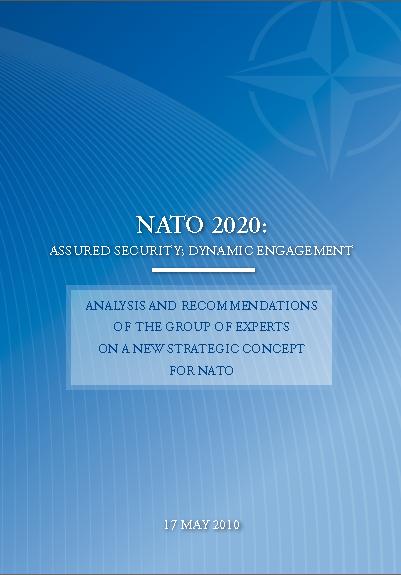
PSYOP and the New NATO Strategy


On May 17, 2010 NATO released the report of a panel of experts containing recommendations for a new strategic approach by the organization. (see http://www.nato.int/nato_static/assets/pdf/pdf_2010_05/20100517_100517_expertsreport.pdf)

I don’t suspect many of my loyal readers will peruse the document. For those of us who have served in NATO organizations, we recognize that there is a level of diplomacy among senior NATO civilians and commanders that requires a high degree of sensitivity and thus far has never called for much urgency.
In the following paragraphs I will provide a glimpse into the 58 page document.

Here’s the BLUF (Bottom Line UP Front)
PSYOP will be needed to deal with the spectrum of threats facing NATO. The US has the opportunity of being the lead dog by demonstrating our expertise and TTP (tactics, techniques and procedures). US PSYOP doctrine and TTP could be the standard for NATO if the USG is willing to make the commitment in terms of personnel and funding.

US training and doctrine could provide a jump start to the nascent ‘new’ NATO. Failure to engage will leave a vacuum that will either be filled by another nation or worse left unfilled resulting in disastrous consequences in NATO’s future conflicts.

The introduction to the 2010 Strategic Concept contains two key points in my opinion, the first of which is a new perspective on the NATO mission:
“Between now and 2020, it (NATO) will be tested by the emergence of new dangers, the many-sided demands of complex operations, and the challenge of organising itself efficiently in an era where rapid responses are vital, versatility critical, and resources tight. NATO” (Page 5)

The second stated point is that NATO has not done a very good job of building value in the minds of the citizens and politicians of NATO countries and notwithstanding its many accomplishments “could fail to retain the public backing and financial support it must have to perform critical tasks well.”

Strangely enough, at least to me, while there is ample mention of missiles and cyber threats, there is scant mention of the need to influence populations in areas where NATO forces find themselves. The strategy acknowledges that there are several factors “that magnify uncertainty”:

• The proliferation of nuclear and other weapons of mass destruction;
• The ambitions of international terrorist groups;
• The persistence of corrosive regional, national, ethnic, and religious rivalries;
• The world’s increased reliance on potentially vulnerable information systems;
• The competition for petroleum and other strategic resources (thereby highlighting the importance of maritime security);
• Demographic changes that could aggravate such global problems as poverty, hunger, illegal immigration, and pandemic disease; and
• The accumulating consequences of environmental degradation, including climate change.

Conclusions cited strikes by international terrorist groups and cyber assaults as key threats and point out that the organization must be able to make decisions rapidly and integrate help from countries and organizations outside NATO to deal with these complex threats. Partnership management was elevated to one of the 4 core NATO tasks highlighted by the 2010 Strategic Concept.

Neither PSYOP nor Information Operations were mentioned specifically. In fact nor was Strategic Communications. With regard to military missions, the document pointed out that military missions complement the core tasks and will include:
• Cooperate with partners and civilian institutions to protect the treaty area against a full range of unconventional security challenges.
• Deploy and sustain expeditionary capabilities for military operations beyond the treaty area when required to prevent an attack on the treaty area or to protect the legal rights and other vital interests of Alliance members.
• Help to shape a more stable and peaceful international security environment by enhancing partner interoperability, providing military and police training, coordinating military assistance, and cooperating with the governments of key countries.

Two other comments were worthy of note: NATO Special Operations should be elevated to a full component command and that “NATO should encourage the further evolution and coordination of national specialisation and niche capabilities”.

Civil Military Operations (CMO) came in for some special attention noting that these are key to complex operations and that civilian capabilities will have to be integrated into a range of operations especially where it is necessary to work with local authorities and combat forces for limited timeframes to provide security and needed public services.

Thursday, December 24, 2009

Yemen: The Next Afghanistan?


I was thinking of giving the Blog two weeks off. After all, it’s Xmas Eve when the pace of government and business slows to almost a halt in the week between Christmas and New Year’s. Well – that was my plan until I came across an article in the December 24, 2009 Arizona Sun: “Airstrike illustrates ballooning US involvement in Yemen” (http://www.azstarnet.com/news/322562)


Map Source: University of Missouri – St. Louis: http://www.umsl.edu/services/govdocs/wofact2007/maps/ym-map.gif
The article talks about increased US military activity in Yemen to bolster the effort of the Yemeni government against Al Qaeda. Yemen is nestled to the south of Saudi Arabia and across the Gulf of Aden from Somalia and Djibouti. Little bells should be going off in your head about the volatility of this situation and the particularly interesting nuances in dealing with the neighbors.

First of all whenever there are ‘drones’ there are ‘accidents’ and civilian casualties or at least the allegation of them cannot be far behind. Failure to deal with the backlash will result in negative opinions of the US and the Yemeni government and a decrement of US status in world opinion in general.

In today’s world there are few secrets, US military involvement is not one of them. This is clearly a case where PSYOP needs to be involved. Drones and military action means PSYOP plans, programs and materials need to be in play BEFORE the eventual accident or allegation.
This particular part of the world has gotten it share of notoriety from US involvement in Somalia, pirate activity and even an episode of the adult cartoon series, South Park. The economic clout of Saudi Arabia and their deep connections to Al Qaeda are well known; consequently US actions in this area cannot be successfully accomplished without some type of coordination with the Saudi’s.

Rounding out the mix is Djibouti which has long been under the influence of the French and is considered a strategic bulwark in the area. Actions which poison a potential ally in the region must be considered with caution and long range strategy in mind.
So we find ourselves coming in to the movie theater in the middle of the feature. This playing feature is “US in Yemen” although it seems strangely like the movie we just saw: “US in Afghanistan” and we didn’t much care for that one.

My best wishes to my brothers and sisters in the PSYOP Community and a special thank you to those of you who are serving in harm’s way at this time of year. May 2010 be a breakthrough year that sees a trend to calmness in the world and a reduction in PSYOP Optempo.

Look for the next PSYOP Regimental Blog entry after the 4th of January 2010.

Tuesday, March 31, 2009

Afghan Poppy PSYOP


The Associated Press ran a story on 30 March “US launches new fight against Afghan drug trade”,


Photo Source: Daily Mail, October 13, 2008

see(http://www.google.com/hostednews/ap/article/ALeqM5hCUxKbunroDLpz-QKfiKnqI0iAWQD978J8OG0).

The latest approach to negating the flow of money to the Taliban and Al Qaida is much like the DEA’s similar campaigns in Latin America. In addition to attacking the supply of opium and driving up its price, the strategy will also concentrate on drug dealer money laundering.

At first glance this appears to be a win – win situation. Not only do you reduce the amount of drugs in circulation, but you strangle the money faucet to terrorist organizations. Success in Latin America is cited as the model outcome.

I’m not convinced it is as cut and dry as it appears. The crux of my discontent is my continuing crusade for a bottom up information engagement campaign. In this case the bottom of the pile is the farmer. The AP story begs the question of the farmer and concentrates on the Obama Administration’s strategy’s emphasizing the supply and money chains.

Long term problems with drugs will persist as long as there is big money to be paid for drugs and the culture and economic well being of the farmer are dependent on opium. The Department of Agriculture needs to be energized to develop a systematic crop replacement for opium. This replacement needs to be cognizant of the growing environment in Afghanistan and the world demand for whatever the replacement crop needs to be. In addition the crop should mirror growing seasons and be highly adaptive to the climate and soil conditions where poppies are currently cultivated.

The program should also include short term financial support and/or supply of food and other items that would be needed by the farmers while the new crop is growing and the system to harvest and market it matures.

From an information view point a classic marketing ‘teaser’ campaign where pictures of a future secure and prosperous life without the terrorists, Taliban or even unwelcome outsiders of any kind controlling the farmer’s destiny. The messages would stress the increased welfare of the farmers and the positives attributes of the new crop such as positive growing characteristics and a higher income potential.

Unless there is research needs to confirm that there is value to messages concerning the reduction of suffering by elimination of the drug trade, I would not employ these messages, not even in passing.

In short the combination of agricultural insight, micro-financing and tribally tuned information engagement is the right way to deal with the Afghan opium supply and a strategy that has a far better chance of long term success.

Tuesday, February 3, 2009

PSYOP and the 2009 QDR

DOD outlined the three major purposes of the QDR:
1. Increase synergy across the Department’s Components.
2. Improve the effectiveness of joint and interagency operations.
3. Ensure the Department continues to efficiently invest the Nation’s defense resources to meet the asymmetric challenges of the 21st Century. The 2009 Quadrennial Defense Review (QDR) can be found at:http://www.defenselink.mil/news/Jan2009/QRMFinalReport_v26Jan.pdf.

PSYOP is mentioned twice in the 48 page document. Once in connection with the need to balance Active and Reserve Components for Irregular Warfare (p 12) and again with regard to Strategic Communication ( p 35)

As to the former, “The Department concluded that persistent presence and sustainment of irregular warfare activities require increasing specific capabilities across the Total Force, including civil affairs and psychological operations capabilities in the Active Component force.” (emphasis added by your humble blogger)

On one hand this would appear to be a blinding flash of the obvious, on the other, it’s nice to see recognition of the issue at the highest levels of DOD. Bottom line here is that the “Big Army” needs more CA and PSYOP support – in fact rather than being an add-on requested as needed, DOD has recognized that CA and PSYOP are as important as shooters, and perhaps even more so for irregular warfare. However, there’s not much of a bull pen to meet the increased demand, and the notion of increasing the size of forces amidst the worst financial crisis in decades will likely not sit well with either the new Administration or the voting public.

DOD is faced with the need to mushroom these two vital capabilities without expanding the number of slots. Historically this has meant that the individual soldier has had to learn new skills and add them to their portfolio of talents. While not all soldiers can adapt to irregular warfare, nor can they adjust from being shooters to builders, it is clear that TRADOC will have to incorporate new doctrine into all branch training to insure at least a basic familiarity with CA and PSYOP concepts, principles and operations.

With regard to Strategic Communication, the QDR reinforces and restates “We are committed to using our operational and informational activities and strategic communication processes in support of the Department of State’s broader public diplomacy efforts. This cooperation will better enable the U.S. Government to engage foreign audiences holistically and with unity of effort.”

This lofty goal falls into the easier said than done box. In a world where the actions of a squad on the ground can be literally on the news around the world in minutes, a holistic effort doesn’t seem possible given the organizational constraints and the fact that Department of State influence does not necessarily extend very far beyond Embassy walls in hostile zones.

One way to attack this problem is to develop country and regional Information Engagement (IE) teams. These teams would be run as a joint venture between State and Defense and managed by the senior person on the ground. USAID and other resources would be marshaled in concert with the team’s guidance and the overall goals and objectives would be set by State since they are the President’s Diplomats. DOD personnel would be tasked with providing support to the program through employment of DOD’s considerable PSYOP product development resources, PAO efforts not to mention security and logistics support.

However, prior to embarking on such an ambitious goal, new rules of the road need to be establish that set metes and bounds, yet offer significant product flexibility on the far end so that USG forces can synergize their efforts to capitalize on events as they occur. The guidance offered must recognize that each theater is different so that tactical IE would vary by location, but overall messaging may not.

Recognizing the instant nature of communications, regional and transnational IE must be orchestrated in a similar fashion. As I’ve stated before, IE should consist of a corporate like entity as well as regional and local information emissaries. The multi-national corporate model may be more of a guide than even the newest DOD TO&E.

Wednesday, January 14, 2009

Smart Power and PSYOP

Senator Hilary Clinton’s confirmation hearing included the call for the use of “smart power”. (http://www.washingtontimes.com/news/2009/jan/14/clinton-touts-smart-power-use/) (Photo courtesy of the Washington Times)

While the hearing was short on facts, on Tuesday Senator Clinton said: “"We are not taking any option off the table at all, but we will pursue a new, perhaps different approach that will become a cornerstone of what the Obama administration believes is an attitude toward engagement that might bear fruit,"

This statement seems to be in line with a previous statement made by Senator Obama in a Senate speech on March 6, 2007: “Win the Battle of Ideas: Defeat al Qaeda in the battle of ideas by returning to an American foreign policy consistent with America's traditional values, and work with moderates within the Islamic world to counter al Qaeda propaganda. Establish a $2 billion Global Education Fund to work to eliminate the global education deficit and offer an alternative to extremist schools.” (Source: www. iwar.org.uk)

Today’s post will speculate on what all this is likely to mean for PSYOP. But first, let’s recap a few things:

1. Senator Clinton comes to her new job with the experience of her Senate years, her exposure to the world stage as First Lady and of course with former President Bill Clinton. Her new boss comes to his new job with a sharp intellect, a solid knowledge of Constitutional Law, a feeling of mandate to implement change and an apparently keen sense of timing and respect for the need of evolutionary versus revolutionary change.

2. The Department of State (DOS) appears to have had its own challenges over the past years as the brouhaha over the inability to get enough Foreign Services Officers to deploy to combat zones has shown.

3. The Economy is putting pressure on the USG to trim its expenditures. History has shown that even Presidential Cabinets with the best of intentions often have conflict over how funding and resources should be allocated.

4. President Clinton and the military did not enjoy a very cordial working relationship.

5. Senator Obama appears to have started his military relationship off on the right foot and has undoubtedly won points by keeping SecDef Gates and Admiral Mullen in their positions in order to help insure a smooth transition from wartime administration to another.

6. No single point of contact really exists for DOD that can deal with issues from the strategic to the tactical.

7. Army PSYOP forces have been divided into regular and ‘special’. Regular supports conventional forces AKA ”the Big Army” and 4th POG supports Special Operations.

8. USSOCOM engages in Strategic Global PSYOP, 4th POG engages in global ‘special’ PSYOP.
9. Air Force and Navy have their own PSYOP capabilities and doctrine while the Army and the Marines share doctrine.

10. IO’s star seems to be descending and PAO continues to reign supreme and independent.

So – what does this all mean.

Need For Greater Coordination and DOS Imprinting

It is likely that the Obama administration, led by Secretary of State Clinton, would increase the resourcing for Public Diplomacy. The will likely lead to more strategic level work since that can be accomplished from the safety of Washington, DC.

An increase of strategic public diplomacy and the communications that go with it will require enhanced interaction between DOD and DOS. A suggestion to elevate tha management of the administration’s programs for both departments might be the establishment of key new roles at major embassies. SES-1 or 06 level individuals will be the DOS focal point for all in country activity to include DOD. These new focal points should also be empowered to manage PAO activities and should be DOS personnel or DOD personnel detailed to DOS with a rating chain solely within the DOS.

Furthermore, there needs to be a greater level of cooperation between SOCOM and State beyond today’s manning level to the point perhaps a limited number of SOCOM personnel could be housed in DOS offices to be in a better position to work with DOS personnel on formulating strategic and country plans and to spider web Executive Branch guidance through the PSYOP and IO chain of Command. SOCOM will also bear the responsibility of insuring that the organizations providing PSYOP support to Conventional Forces are fully tuned into to what is happening at the strategic level and that media intelligence, messaging, selected products and other tools/information is accessible to them.

At the tactical level DOD will still be bear the brunt of information engagement because they have the resources to provide their own security. DOD should work with DOS to insure interoperability of PSYOP/Public Diplomacy messages and products. Tactical PSYOP is likely to be stretched thinner than it is today as the number of places where their services are required will increase over time. While the conflicts in Iraq and Afghanistan may eventually diminish in scope, it is clear that other situations will arise to take their place.

Future conflicts may take the tribal model found in Afghanistan or the scattered urban model of Iraq or perhaps the super city battle grounds of the worlds’ most populous cities. The recent terrorist incident in Mumbai may be a precursor to similar actions in Jakarta, Lagos, Dhaka (Bangladesh), Cairo or Karachi or flair ups in Somalia.
Tactical PSYOP forces will continue to be stretched so that the Obama administration will need to be sensitive to ways and means of making the force more efficient without breaking it. As an example, it would be prudent to determine if the bifurcation of Army PSYOP Forces into separate 4 star commands makes sense in light of the anticipated threats and deployments.

Monday, October 13, 2008

One Ring To Rule Them All

On October 12th the Washington Post published a story “U.S. Military Plans Polls and Focus Groups in Iraq”. The story described “The proposed polling contract, which has yet to be awarded, would centralize activities currently conducted by four different commands within Multi-National Force-Iraq and the Psychological Operations and Information Operations task forces.”
(http://www.washingtonpost.com/wpdyn/content/article/2008/10/11/AR2008101101967.html)

ThePost pegged the new strategic communications initiative as a $15 million effort to supplement the military’s existing strategic communications budget of $100 million year. And “would centralize activities currently conducted by four different commands within Multi-National Force-Iraq and the Psychological Operations and Information Operations task forces.”

As a civilian market research professional and the former DCO of the Combined Joint Information Campaign in Bosnia I have some opinions about this contract and the story – some positive, some not so positive.

First of all the notion that the identity of the ultimate user of the data, i.e. the U.S. government can be kept secret is preposterous. In the day of the Internet to quote the title of a book by Richard Hunter of Gartner Group, we live in a “World Without Secrets”. It is only a matter of time before the nature of the poll or focus group becomes public. Given the heat the military took for actually paying a writer to write positive stories from the LA Times and others, some enterprising journalist will have a source that uncovers one such poll or focus group and will blow it up in hopes of winning a Pulitzer Prize.

Secondly, as correctly pointed out by SecDef Gates on more than one occasion, the State Department should be the lead dog in this kind of effort, not the military. Public Diplomacy and helping other nations rebuild their infrastructure is the responsibility of the Department of State. Their diplomats along with seconded representatives of other Cabinet Level Departments should be driving the nation building, not the Department of Defense.

Third, polling and focus groups produce intelligence – they don’t change opinions, nor do they perform concrete functions. Who will use this information and what will they do with it? Doesn’t make more sense to beef up the as recommended by SecDef Gates?

Fourth, any contractor selected for this project – assuming it moves along will need a civilian oriented buffer organization that can interface with the native Iraqi sources, analyze the collected information and make appropriate recommendations. Military personnel are simply not trained nor experienced in market analysis and perhaps most importantly, they don’t think like civilians.

Fifth – Congress is Clueless If the quote attributed to Senator James Webb (D-VA) that "At a time when this country is facing such a grave economic crisis . . . it makes little sense for the Department of Defense to be spending hundreds of millions of dollars to propagandize the Iraqi people," is true, it is clear that Senator Webb hasn’t the faintest idea as to the importance of strategic communications and likely has no clue as to why effective strategic communications and information engagement are needed to stab at the heart of what fuels the success of terrorists and insurgents.

While there is always more to government contracts than printed in any publication, this particular story raises some red flags that need attention.

Monday, September 15, 2008

YouTube Purge – Like Whack A Mole, But Less Fun

The San Jose Mercury News ran an Associated Press story “YouTube to purge terrorist and other videos inciting violence” (http://www.mercurynews.com/ci_10451247). The article essentially explained that Google will “rely on users to report objectionable videos”.

The use of video via the Internet is an explosive and viral phenomenon. It is an incredibly cost effective graphic media requiring little or not capital equipment. Furthermore given the rate of video additions to YouTube (13 hours every couple of minutes according to the article or about 400 hours of videos every clock hour) it would be impossible to find, much less eliminate the objectionable videos.

The Internet will remain a key means for Al Qaeda and others to recruit and share information. Over time, I believe that mobile phones will supplant PC and laptop access as the main vehicle for sharing information and recruitment. Mobile phones have a great rate of acceptance in developing countries and are far more available and less visible than Internet access via cafes, etc.

The key challenge for PSYOP today is to ‘skate to the puck’ a sports metaphor (which I usually avoid) meaning to go to where the target will be, not where it is now. We in the PSYOP community need to be on top of the latest techniques of mobile phone habits and be prepared to pounce on this media based on its importance in target analysis.

This will require a level of technical competence and international perspective heretofore unparalleled in PSYOP efforts and will likely require the concerted efforts of a younger generation to bring to fruition.

Wednesday, June 11, 2008

Can PSYOP Prevent Murderer Bombers?

First of all, anyone who detonates an explosive with the intent of killing others is a murderer and I frankly don’t give a rat’s ass if they end up killing themselves in the process.


The Washington Times featured an article: “Suicide Recruits Dropping in Iraq” (http://washingtontimes.com/news/2008/jun/11/suicide-recruits-dropping-in-iraq/) which reported a decrease in foreign recruits.

Irregular Warfare reeks of local action. People know their neighborhood better than any visitor can hope to. Local conditions affect those who live there and those whose families have lived in that area in the past. Even if the report is correct, the issue remains that murderer bombers are lethal and hard to stop. A thinking and breathing IED is a dangerous weapon. It's also my contention that recuritment of murderer bombers takes place locally and must be stopped there rather than anywhere else.

From a PSYOP perspective I suspect that there is a tipping point in the mind of the recruit. The apprentice murderer reaches a point where no amount of convincing will dissuade them from going forward. This point may be reached due to the influence of peers, people they respect, or out of desperation. All the PSYOP in the world is too late.

PSYOP should be directed as early in the cycle as possible. Just as small elephants are easier to train than big ones, PSYOP should be laser focused on diverting individuals from this path is likely to have the most effect especially if the PSYOP messages come across as both credible and powerful. A prerequisite to success in this kind of a campaign would be extremely detailed local knowledge. Details like the family composition of each apartment building, the most popular gathering places, the food most closely associated with a warm family atmosphere, the most influential teachers and religious leaders and a keen sense of what has gone wrong there as well.

Messages should be delivered by complementary means with an emphasis on word of mouth and informal communications. If possible messaging should be present at key locations perhaps using artwork such as murals, graffiti and only if appropriate – posters.

Small investments at the local recruiting source will be big dividends by diverting would be murderer bombers from their course.

Monday, June 9, 2008

PSYOP And Two Theories of Terrorism

The Sunday NY Times featured an article “A Not Very Private Feud Over Terrorism” (http://www.nytimes.com/2008/06/08/weekinreview/08sciolino.html?scp=1&sq=Not+Very+Private+Feud&st=nyt). The article postulated that there are two competing theories about the state of terrorism. Position 1, championed by Bruce Hoffman of Georgetown is that Al Qaeda is alive and well and more dangerous than ever. The contra view is espoused by Marc Sageman author of “Leadlerless Jihad” who argues that the main terrorist threat is from unorganized small groups and highly self-motivated individuals.

The question for today’s post is: Does it matter?

I believe the answer is likely to be ‘no’. Under either scenario the target audience with the biggest upside payoff is not necessarily the radical bent on destruction of the West or a successful IED or murder (let's not dignify it as a suicide) bombing. Rather the target audience is the support structure and those in a position to help thwart these potential attacks through their behavior. Mao had it right when he characterized guerrilla warfare (now more popularly referred to as Irregular Warfare) as fish swimming in the sea.

Our PSYOP messaging seeks to either dry up the sea around enemy fish or make the waters hostile enough so that the enemy fish cannot thrive. PSYOP campaigns will not necessarily be aimed at individual targets but at audiences that can be influenced. Successes in defeating terrorists will likely be local rather than international. They will come once the surrounding citizenry feels that it is in their best interests to make life difficult for the terrorist.
Terrorism, like elections is won at the local precinct. Our messaging objectives should focus on the neighborhood and withering the climate of support.

Having said this, we need to adopt a broader perspective in our counter propaganda and IO analysis. Analysts should continue to look at the big picture of Al Qaeda as it communicates and recruits. Particular attention needs to be paid to the Internet.

The Internet is an evolving medium. No one can doubt its importance, but few will admit they don’t understand it. Senator Obama can credit the Internet as being a force in his success. He employed the Internet with great success to collect donations and to recruit and communicate with those new voters who were most at home there. He is also reportedly beefing up his team to track down rumors and erroneous statements on the Internet. (http://www.nytimes.com/2008/06/08/us/politics/08obama.html?sq=adding%20muscle%20is%20a%20team%20that%20is&st=nyt&adxnnl=1&scp=1&adxnnlx=1213024466-5Tpe+3GEltIDpYyg9rbNzQ)

This sort of defensive marketing (PSYOP) requires not only a big picture view, but global perspective and local language competency.

In short – we don’t have to support a theory of terrorist organization – we need to support a bi-furcated PSYOP strategy employing local efforts in the context of strategic understanding.