Showing posts with label Information Operations. Show all posts

Saturday, October 1, 2011

MISO and the Generation Gap


For the past week I have been attending an elite information security conference (www.COSAC.net) in Ireland. Unlike most cyber security conferences which are mired in technical details, this one explores higher level issues.

Photo Source: http://www.flickr.com/photos/joi/455111587/#/photos/joi/455111587/lightbox/

One of the more interesting topics was the nature of personal privacy or the lack thereof on the Internet. A key side bar was the fact that the younger generation has little or no concerns and is given to texting and social networks for even the most intimate communications.

There are a number of important PSYOP principles that flow from these trends. First of all, as Sun Tzu would advise - know your target. This means campaigns addressed to younger audiences probably should be crafted by that age group.

A second observation is that lack of expected privacy opens up a significant opportunity for the potential use of deception in the IO campaign.

Thirdly, denial of electronic communications can mean infliction of a high level of stress and anxiety.

Consequently, campaigns targeting any age specific population group should employ a collaborative environment that includes people within the target age categories in addition to appropriate linguistic and cultural knowledge. If such a mix is not available, then it is highly recommended that rigorous pretesting be employed prior to launching the campaign.

Friday, July 22, 2011

PSYOP/MISO: Battlefield Wild Card


I have just finished my 4th iteration of being the PSYOP/MISO SME for an exercise for Public Affairs Officers. The scenario is that a Joint Task Force (JTF) is deployed in a semi-permissive tactical environment to provide Humanitarian Aid/Disaster Relief (HA/DR) at the invitation of the government of a nation stricken by an earthquake.


(Photo source: http://www.uhsda.com/)


While the actual tactical situation is merely the backdrop for the real purpose of the exercise – exposing junior PAOs to life on a Joint Staff commanded by a 2*, I was able to give some thought to how MISO would support an actual operation of this kind especially if the tactical environment turned ugly.


As long as the environment is permissive, meaning no one is shooting at us, MISO functions primarily as an information channel. Loudspeaker teams with appropriate speakers or recorded messages would broadcast locations and schedules for aid distribution. Host nation and JTF print resources could be used to print with signs directing people to the aid resources and educational messages designed to teach people how to reduce their susceptibility to water borne diseases like Cholera and Typhus. Loudspeakers could also be used to broadcast into a collapsed building to assure the victims that help was there.


What happens when the bad guys start shooting? There is a great deal of doctrine and precedent on how Tactical PSYOP Teams (TPT) support the CDR in a traditional force on force situation. There’s a lot less out there on how TPT would be involved against insurgents in localized firefights – or if they would be at all.


Given that many insurgent operations are ‘hit and run’ – it strikes me that the MISO emphasis must be more on the long-term campaign, the one designed to convince adversaries to join the good guys. Perhaps there is a place for deception in making the bad guys think we have more resources than we do, or to induce them to direct their firepower at the wrong targets.


In some situations MISO could give way to EW and CNO under the right circumstances and for the proper targets. These IO options can generate the positive psychological effects as direct PSYOP/MISO.


Reader comment invited.

Wednesday, May 25, 2011

Information Support Operations An Afterthought At Best for Homeland Security


On May 21 & 22, 2011 I was an evaluator for an exercise which took place in a major city. The city is the hub of an 8 city Urban Area Security Initiative (UASI). Federal government grant money paid most of the bills and sponsors took care of most of the rest.

The exercise involved 4 Emergency Operation Centers scattered over the area and was a series of ‘lanes’ designed to test Police SWAT (Special Weapons & Tactics), Fire, Urban Search & Rescue (USR), Emergency Ordinance Disposal (EOD), Emergency Medical Services (EMS). Each lane was coordinated by one agency and evaluators came from far and wide.

By design, the event is overall very low key, although there was an initial press conference attended by the city’s mayor and other dignitaries which resulted in some coverage prior to the event.

Media access was limited during the exercise and there were scant posters or other indications of locations or tactical lanes. In short it was akin to a military operation where the name of the game is to keep the public out of the way to minimize interference with the operation and maximize Operational Security (OPSEC).

While I can understand this posture in terms of external information support, I felt I was in a time warp when it came to the exercise play. There was absolutely no attention to the potential negative effect of information operations either intentional or accidental. Just as in my early Army exercise (PRC-6 anyone?) days, guidance was put out that communications are not to be interfered with because it was hard enough to communicate during the height of battle without someone messing with you.

More importantly the notions of misinformation, hostile crowds and pesky reporters were not considered at all. As for presence, there was only a single Public Affairs Officer at the central EOC with a few of the agency PAOs training their principals, but not actively involved in the exercise.

On the Command information side, EOC communications were via a chat like software package called WebEOC. No video and not very much contemporaneous reporting from other sources contributed to the CDR’s situational awareness.

Given the 24 hour news cycle, the persistence of paparazzi, and the ubiquity of cell phone video cameras – this is a mistake. Our enemies are clearly not stupid and are likely surveilling soft targets as you are reading this. The inability to provide information support operations in homeland security is a vulnerability that is open to exploitation by our enemies. DOD and DHS need to take the initiative and incorporate the informational aspects of homeland security into their efforts and as key elements in the Homeland Security Exercise and Evaluation Program (HSEEP) and a key factor in determining if the government got its money’s worth for its grant funding.

Wednesday, May 11, 2011

After Afghanistan Where Does PSYOP Go Next And How Do You Train For It?


OBL is dead and Congress is clamoring for a re-evaluation of the strategy in Afghanistan. While I’m clearly not an expert on that theater, and once I again I disclose that I’ve never been there, it strikes me that killing one guy, even one very important guy, should not call for a re-make of a strategy if the strategy was any good in the first place. Having said that – what’s next after OBL and Afghanistan?

(Photo Source: http://www.trafficsign.us/w24.html)

I believe that demand for contractors can be seen as a leading edge intelligence indicator of US involvement. I picked a well known contractor at random and tallied the total of openings by location: Iraq 42, Afghanistan 39, Kuwait 10, Africa 9, Balkans 5, and Latin America 2. Let me stress that these are not PSYOP/MISO openings, but general openings.

What does all this mean? I believe it means a couple of things. First of all, even with the end of ‘conflict’ in Iraq there is still a great demand for American support. While the number of troops might decline overall, there will be a constant need for Military Information Support Operations to inform and influence the population. The numbers in Kuwait and Africa portend that, like the Balkans, any one of a number of countries can go to crap in a New York minute.

For one reason or another we don’t seem to be training foreign forces on PSYOP/MISO which means that “we” have to do it.

Given that Reserves will bear the brunt of any support effort to the Big Army, or General Purpose Force, it follows that a major US military commitment any where will more than likely call for Reserve PSYOP participation sooner or later.

Can you train as you fight if you have no idea where you are going? In certain things I believe you can. Personal conditioning, marksmanship, combat driving and survival skills are paramount. The nuances of climate may have to depend on best guess, but it wouldn’t be crazy to train for extreme heat or cold and high altitudes.

From a technical perspective, Internet PSYOP as well as TV will be employed in selected AOs and it is possible to train on editing, composing, etc. As for being ready to go anywhere at any time, given the amount of potential locations and the language/culture variations, I think this may be difficult. Having said that perhaps learning about historically disadvantaged locations such as Africa and keeping up to date on the latest regimes in Latin American and perhaps ‘the stans’ and their brethren may make good sense. Comments invited.

Tuesday, March 15, 2011

Something Different: IO and Terrorists


Today's posting is something a bit different. Following is a concept paper I drafted for a colleague. Essentially I took the IO capabilities of DoD and then provided analysis on Terrorist employment of those same capabilities.

Comments and input are welcome of course.

Photo Source: http://samsonblinded.org/blog/osama-too-good-to-be-true-part-1.htm

Terrorist Use of Information Operations (IO)

COL (R) Lawrence D. Dietz; General Counsel & Managing Director Cyber Security,
TAL Global Corporation

I Introduction
The US Department of Defense employs Information Operations to influence the course of battle and act as a combat multiplier. Terrorists are also very successfully employing IO and technology to their advantage. This short paper will give you an overview to assist you in future research.

II Department of Defense IO Capabilities

Reference: http://www.carlisle.army.mil/usawc/dmspo/Publications/Information%20Operations%20Primer%20AY11%20Web%20Version.pdf; Accessed 15 Mar 11

A. Core Capabilities

1. Psychological Operations (PSYOP) now Military Information Support Operations (MISO) – operations designed to influence the behavior of the target in line with CDR’s Concept of the Operation (CONOP)

2. Military Deception (MILDEC) – actions taken to shield true capability from the enemy (e.g Patton’s fake Army in the UK as a decoy for the Normandy invasion.

3. Operations Security (OPSEC) – all measures taken to shield information from adversaries and enemies

4. Electronic Warfare (EW) – dominance of the electronic spectrum, actions can include jamming to deny the enemy is communication, actions taken to identify enemy electronic emitters to facilitate identification of their units, other order of battle information, targeting for interception or jamming.

5. Computer Network Operations (CNO)
a. Computer Network Attack (CNA) – denying the enemy the use of their IT networks.
b. Computer Network Exploitation (CNE) – using the enemy’s network for friendly advantage, e.g. intelligence collection, communications medium, storage of hostile software code, etc.
c. Computer Network Defense (CND) – defending one’s own network

B. IO Supporting Capabilities

1. Counterintelligence
2. Combat Camera (Air Force Unit that provides still and video camera support)
3. Physical Attack
4. Physical Security
5. Information Assurance – protecting electronic information

C. IO Related Capabilities

1. Public Affairs = Public Relations; a conduit to the media and creator of print, and broadcast media.
2. Civil Military Operations – military forces employing civilian skills to improve the life and infrastructure of a local population.
3. Defense Support to Public Diplomacy – Department of Defense support to the Department of State’s Public Diplomacy Operations

II Terrorist Use of IO Capabilities

A. Core Capabilities

1. Propaganda – Terrorists are making exceptionally good use of the Internet as a means to inform, influence and recruit. They are also being supported by ‘friendly’ media such as Al Jazeera which tends to spin the news in a way that is favorably received by the Arab Street. Terrorist propaganda is especially effective due to the speed with which they capitalize on events that serve their purpose. This rapid response is indicative of a streamlined or de-centralized chain of command and abbreviated approval cycle.

Allied information support operations tend to be much more cumbersome due to the heavy ROE and complex approval schema which can often include both military and civilian command cycles.

2. Military Deception (MILDEC) – In my view terrorist operations tend to be decentralized although they employ deception to shield their true intentions and make very effective use of ‘cover’ identities.

3. Operations Security (OPSEC) – Terrorist cells are generally quite secure due to their decentralized nature. Most terrorist organizations appear to have a very healthy respect for Signals Intelligence and will avoid electronic means of communications such as mobile phones to avoid detection. Trade craft to include steganography (the concealment of messages in pictures) is also employed along with other measures such as compartmentalized chat rooms, common password schemas, etc.

4. Electronic Warfare (EW) – Improvised Explosive Devices (IED) are often remotely detonated via mobile phones, garage door openers, etc. I am unaware of any large scale terrorist jamming efforts to date.

5. Computer Network Operations (CNO)

a. Computer Network Attack (CNA) – Experts believe that terrorists will employ cyber attacks in conjunction with a kinetic or physical attack. CNA may be employed prior to or subsequent to the kinetic attack depending on the type of operation.

b. Computer Network Exploitation (CNE) – Terrorists, and nation states for that matter are routinely probing networks of interest. Terrorists are likely to employ a combination of human agents to infiltrate target organizations to be in a better position to exploit networks directly or to insert malicious code (such as the Stuxnet reported planted to damage the Iranian Nuclear Research program) for later execution.

Exploitation can also include gathering intelligence from the network. Terrorist cells must be self-financing. Harvesting data (personally identifiable information or PII) that allows them to steal identities which in turn allows monetization through theft of funds, goods or services is very effective.

Terrorist cells can also exploit networks by gathering information that may be of use to the movement in some way such as to identify potential funding sources or gather target information.

Terrorists are employing the Internet as a cost effective and for the most part, relatively secure communications channel. Their global operations lend themselves to Internet communications for availability, cost and security reasons.

c. Computer Network Defense (CND) – Unable to comment.

B. IO Supporting Capabilities

1. Counterintelligence – No comments

2. Combat Camera – Terrorist organizations make effective use of still and video cameras. They also exploit images captured by other sources such as the media.

3. Physical Attack – Mumbai type attacks are very likely to increase. They require a small footprint, are relatively low in cost and very difficult to defend against. They are very effective at exploiting soft targets which in turns results in dramatic chaos which is then exploited through the media and by the Terrorists’ own sources.

4. Physical Security – No Comment

5. Information Assurance – See Opsec Above

C. IO Related Capabilities

1. Public Affairs = Public Relations; Terrorists are exceptional PR professionals. They understand the value of publicity, especially the emotional appeal of images. They are able to appeal to ‘friendly’ media to a very great extent.
2. Civil Military Operations – Hezbollah and the Taliban have been quite successful at using social welfare as a means to ingratiate themselves with local populations.
3. Defense Support to Public Diplomacy – Governments tend to hide their association with terrorist organizations.

Thursday, February 24, 2011

Rolling Stone As A Military Authority


I must confess that I don’t think of Rolling Stone Magazine as an authority on military matters. True, while in college I did regard Playboy as a source of good interviews, but that was a long time ago. The February 23, 2011 Rolling Stone article, “Another Runaway General: Army Deploys Psy-Ops on U.S. Senators” (see http://www.rollingstone.com/politics/news/another-runaway-general-army-deploys-psy-ops-on-u-s-senators-20110223?page=1)

Unlike Michael Hastings, the author of the article, I am an attorney and I don’t agree with his characterization of “illegal”. While it is indeed true that PSYOP (now Military Information Support Operations or MISO) cannot be employed against US forces, the incidents portrayed in the article don’t even come close to being illegal. They may seem inappropriate – but implying that a group of soldiers could “manipulate visiting American senators” is nonsense.

Information Operations (IO) teams are often multi-disciplined, but they are certainly not endowed with mystical powers that give the ability to control people’s minds. LTC Holmes, the IO officer quoted in the article is either confused, misquoted, unaware of what PSYOP should or should not do, incapable of dealing with the media or all of the above.

Labeling all PSYOP personnel as “propaganda people” is not only unfair and untruthful but also borders on slander. This type of quote surely reveals how little the Rolling Stone really knows about PSYOP in the first place and that they are more interested in readership and web clicks (which of course lead to more advertising money – duh) than in reporting actual news.

In the commercial sector many companies employ government relations as an information conduit between the company and the government. They may also employ lobbyists, who are paid and generally must register themselves to influence legislation. These two functions are related but different. The military possesses no such stated capability.

In my view, LTG Caldwell was only being prudent by preparing for a visit by a senior Congressional Delegation (CODEL). Executives prepare for visits by elected officials all the time and elected officials go out of their way to provide bios and other information through their web sites and other means.

Notwithstanding the fact that Caldwell is a 3 star LTG, he doesn’t have a government relations staff. People with the skills to prepare him for the visit would like sit in a number of places throughout his HQ such as Public Affairs, PSYOP (MISO), Intelligence and perhaps even Personnel or Operations. He could conceivably turn to any or all of these sections to provide people for this additional duty.

Clearly LTC Homes was a poor choice. To imply that PSYOP is the Voldemort of the military able to apply magical powers is, in the words of BG Anthony McAuliffe: “Nuts!”

Wednesday, January 5, 2011

Hey Moe! Implications of al-Sadr Return to Iraq


On 5 January 2011 the Washington Post reported that “Cleric Moqtada al-Sadr returns to Iraq after self-imposed exile (see http://www.washingtonpost.com/wp-dyn/content/article/2011/01/05/AR2011010500724.html?wpisrc=nl_natlalert)
Photo Source: Bassem Tellawi- Associated Press via the Washington Post.


Sadr has evolved from faction leader to an important piece of the Iraqi governmental puzzle. The memory of battles in and around “Sadr City” are still somewhat fresh. Sadr is a true wild card, one that bode well or not for Iraqi and US interested. He has done many things right to position himself as a keystone in the new Iraqi government.

He has done well to retain the loyalty of his followers and pays attention to the small things that impact loyalty such as visiting the grave of his father upon his return. Sadr also was the beneficiary of a deal reportedly brokered by Iran.
What does all this have to do with Military Information Support Operations?

I believe there is a great deal at stake because Iraq and its new government are now in charge of their own destiny, unless something really bad happens such as an increase in sectarian violence, a power grab by Sadr or some other development that pushed Iraq back on the brink of disaster.

Now is the time for contingency planning by Executive Branch Strategic Communications, State Department Policy & Public Diplomacy, MISO personnel. Alternative scenarios need to be developed and considered. Intelligence and fact gathering needs to be on-going and file footage for potential information operations should be compiled.

Additionally it would be useful to track press releases and other activity by the Maliki government as well as profile and track the public affairs apparatus of the Sadr organization.

Wednesday, October 13, 2010

Pondering PSYOP and Papiamento


The Blog has been silent for a few weeks because my wife and I have been on a 2 week cruise through the Panama Canal. We made a pact and turned the iPhones off and locked them in the room safe from the time we got on the boat until we disembarked at San Juan on Monday, 11 October 2010. We were also off the grid so if I didn’t know something or wanted to learn more I had to go about it in the old fashioned way.

We left San Diego made 3 stops in Mexico and 1 stop in Cost Rica before transiting the Panama Canal. Our last two ports of call were Aruba and Curacao. Our visit coincided with Curacao’s last day as a part of the Netherlands Antilles; on 10/10/10 they would become an independent country within the kingdom of the Netherlands.
As we drove around I thought about this unique island as a PSYOP venue.

In some respects it would be an ideal PSYOP venue as it is not very big, but has a literate population that has access to mass media including Internet (free Wifi is a selling point for restaurants) and of course TV and radio. Curacao radio has some interesting aspects including the first use of solar power by Radio Hoyer.

From a cultural perspective there is an affinity for the Netherlands of course, and a sibling relationship with Aruba, Bonaire, Saba, St. Eustatius and Saint Maarten sister islands from the former Netherlands Antilles.

While seemingly idyllic, the island also has its own language, Papiamento which is described as ”a mixture of Spanish, Portuguese, Dutch, English, French, and it also has some Arawak Indian and African influence.” (see http://www.papiamentu.com/).
It struck me that a Curacao like construct might be an innovative PSYOP practical exercise because it would involve a variety of key ingredients: unique language and culture, connection to a European nation, modern communications, variety of ethnicities and proximity to a significant Communist nation – Venezuela. In fact the floating market in Curacao consists of Venezuelan products sold by Venezuelan citizens.

While I recognize the need to focus on today’s conflicts, case studies and hypothetical situations such as might be symbolized by Curacao are worthy of consideration as teaching tools to help foster creative thinking and build skills without the constraints of today’s battlefields. Creative thinking is the way that PSYOPers have fought in the past and will do so in the future. Being able to apply a variety of tools and techniques in an unstructured environment is often the key to success.

Wednesday, September 22, 2010

Social Media PSYOP - Overrated?


There is no question that social media is a hot topic. Everyone from marketing and sales gurus to attorneys are pondering the implications of social media and how to harness this new medium to achieve their own goals.

On September 7, 2010 the Institute for Defense and Government Advancement published an article entitled “Psychological Warfare in the Social Media Era: Winning Hearts and Minds through Facebook and Twitter” by Nick Younker (http://www.idga.org/article.cfm?externalid=3119).

Mr. Younker contends that “Harnessing and controlling messages distributed via the internet and social media will be a next big battleground to win the heart and minds of the world’s masses regardless of who is the enemy of the day. The question of which nations will control and push out the message most effectively will become increasingly important. One thing is clear; whoever controls the message controls the masses. And whoever controls the masses will have the ability to win future wars.”

First of all, while the Internet and Social Media in particular seem to be obsessions in the ‘developed’ world and while addiction to texting and other total connectivity is running rampant, not everyone is plugged in.

In many current and potential AOs the Internet is as out of reach as the stars. Rural people are facing the challenge of feeding their families, finding clean water to drink and staying healthy. So I don’t regard Social Media PSYOP or even Cyber PSYOP as a silver bullet able to effectively target every enemy or adversary.

Having said that however, social media is important and must be addressed. This is a classic case where a CONUS based specialized unit could be the DOD or the US government “Center of Excellence for On-Line Influence”. As such messages could be targeted to specific audiences and technology would be constantly updated and where there would be no constraint on bandwidth.

This (God help me) Government Information Support Operations (GISO) unit would be composed of DOD, Department of State and augmented by other personnel from the DOJ, Commerce and perhaps treasury.

To be effective it would have to be served by an all source intelligence center which would be plugged into the respective departmental intelligence sources , commercial and academic resources (e.g. Carnegie Mellon).

The center would also have a PAO component which would be responsible for its own content and messaging and serve as the conduit of appropriate information and messages to and from on-line and perhaps traditional media.

Of course the prerequisite for establishing such a center is an overarching strategy for the use of on-line media by the US Government – something that appears to be a long way off.

Wednesday, June 30, 2010

The PSYOP Brand – A Commercial Perspective


As a Reservist I have the privilege of orchestrating two parallel careers. As Colonel I served in both PSYOP and MI slots in a variety of settings ranging from SIGINT Platoon Leader to IO Officer at SOCOM. On the commercial side my career was concentrated in High Tech marketing. My last full time salaried position was with Symantec Corporation, the makers of Norton Antivirus. My first boss was the Executive VP in charge of “Brand and Communication”. He was hired by the CEO because while at IBM my boss demonstrated exceptional skills at Branding and Public Relations (Public Affairs or PAO in military jargon). Another of my VP bosses was an acknowledged leader in marketing techniques.

(Photo Source: China Wholesale Gifts)

I learned quite a bit about branding and marketing in my 6 years at Symantec. Above all - the purpose of the brand is to increase the value of the company and make it easier to sell products and services. Brands need to be easy to recognize, and simple to understand. The brand should convey the essence of the organization and its product or service at a glance.

In my view the issue at hand with branding for influence operations is as more the big picture than the PSYOP name change. Neither “Information Operations” nor IO is a well understood phrase or a lead element in most commands. While Senior Leaders and Commanders believe that it is important to prep the information battlefield and that the need to influence foreign audiences is greater than ever, it would be fair to say that IO is still a nascent discipline that has less than universal acceptance and is nowhere near on an equal footing as kinetic operations.

Most CDRs and staffs at the GOFO (General officer/Flag Officer) levels have not demonstrated the real desire or ability to orchestrate and coordinate information weapons systems. PAO remains aloof and dedicated to the purity of being the CDR’s voice; CNO remains a dark art practiced only by the chosen few and we in PSYOP are now running around like a dog chasing its tail self-flagellating over the name change.

Here’s the real deal – SecDef Gates and Secretary Clinton need to sit down and lay out the path for the use of information as a an instrument of US government (USG) power. It would be ideal for the President to provide his guidance, not because he is the Commander-in-Chief, but because his election shows a mastery of the information battle space. In any event their staffs need to clarify the jargon and doctrine across Strategic Communications down to tactical Military Information Support and cascade the results throughout the USG.

MG Csrnko and SWC need to work quickly with SOCOM to develop the common grounding for the PSYOP Community so that we can all move out smartly at the same time and start on the same foot.

Wednesday, June 23, 2010

MISO: Is it soup yet?


With lightning and a clap of thunder from the Pentagon, PSYOP is to be stricken from the Defense system just as the name Moses was removed from the legacy of Egypt. The Secretary of Defense has approved the recommendation to change PSYOP to Military Information Support and/to Operations (MISO). The Army Chief of Staff, General George W. Casey, Jr. has directed his staff to develop and orchestrate a plan designed to replace “PSYOP” with MISO in the Army (and presumably DOD) lexicon and branches.
Photo source: http://www.ecosalon.com/simple-miso-soup/

The name change follows the recommendation of the DSLC or Defense Senior Leader’s Conference. This is a conference co-hosted by SecDef (Secretary of Defense) and the CJCS (Chairman of the Joint Chiefs of Staff). Attendees typically include the Combatant Commanders, Service Chiefs and elements of the Strategic Planning Council. The meetings are held three times a year (Jan, May and Sep) and are executed by the Director, Joint Staff. For some key bullet points on DSLC see: http://hqinet001.hqmc.usmc.mil/dmcs/Routine%20Reports%20&%20Meetings/DSLC.htm.
The name change has been an emotional topic and has been bandied about for years. On the one hand, “PSYOP” has a long and distinguished history with traditions and a nascent branch espirit de corps. On the other, demand for PSYOP forces is escalating and the optempo is breathtaking.
Lack of emphasis of influence operations by senior combat CDR and the bifurcation of PSYOP forces between SOF and Reserve chains of command continues to hobble efforts to optimize and standardize PSYOP training and operations. Key challenges are: elevate the status and importance of information support (PSYOP/PAO) to the force; optimize force development, command and control to deal with burgeoning demand, provide for future conflicts where cyber influence – especially on non-state actors is critical.

Perhaps the name change signals a renaissance of the influence profession and missions.

It is past time for the influence aspect of military operations to assume its rightful role as a leading element in today’s force. This implies strong senior leadership support in terms of resourcing and fast tracking the policy and doctrinal changes that are needed in today’s world.

The name change is a perfect reason for renewed efforts to ‘educate’ Congress on what we do why MISO is an important instrument of government power. As a non-lethal battlefield multiplier MISO can more positively impact world opinion of US efforts than kinetic operations.

As good soldiers we have been given a lawful order and must execute it. We need to put aside any personal feelings we might have about the loss of tradition, and consider how we can leverage the name change and the massive activity that is needed to revise ‘the system’ across personnel, operations, training and logistics required to effect the change.

This is also an opportune time for the re-design of the Information Operations (IO) playing and career fields. In particular the need to integrate PAO and MISO as synergistic tools for the CDR is critical. Renaming and repositioning MISO can be a catalytic process to help foster this process.

All of us in the community need to embrace the change regardless of our personal feelings and use this window of opportunity to strengthen the community – perhaps not so much for ourselves, but for those who will come after us.

Tuesday, May 18, 2010

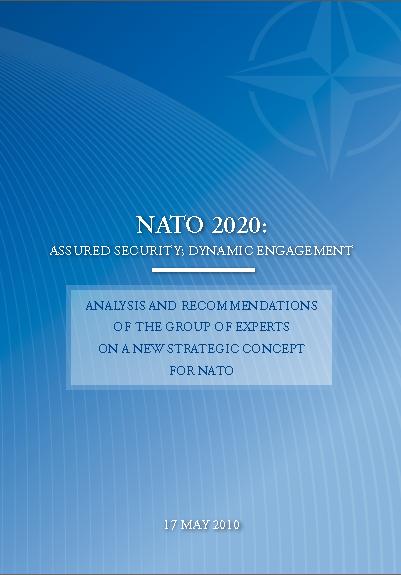
PSYOP and the New NATO Strategy


On May 17, 2010 NATO released the report of a panel of experts containing recommendations for a new strategic approach by the organization. (see http://www.nato.int/nato_static/assets/pdf/pdf_2010_05/20100517_100517_expertsreport.pdf)

I don’t suspect many of my loyal readers will peruse the document. For those of us who have served in NATO organizations, we recognize that there is a level of diplomacy among senior NATO civilians and commanders that requires a high degree of sensitivity and thus far has never called for much urgency.
In the following paragraphs I will provide a glimpse into the 58 page document.

Here’s the BLUF (Bottom Line UP Front)
PSYOP will be needed to deal with the spectrum of threats facing NATO. The US has the opportunity of being the lead dog by demonstrating our expertise and TTP (tactics, techniques and procedures). US PSYOP doctrine and TTP could be the standard for NATO if the USG is willing to make the commitment in terms of personnel and funding.

US training and doctrine could provide a jump start to the nascent ‘new’ NATO. Failure to engage will leave a vacuum that will either be filled by another nation or worse left unfilled resulting in disastrous consequences in NATO’s future conflicts.

The introduction to the 2010 Strategic Concept contains two key points in my opinion, the first of which is a new perspective on the NATO mission:
“Between now and 2020, it (NATO) will be tested by the emergence of new dangers, the many-sided demands of complex operations, and the challenge of organising itself efficiently in an era where rapid responses are vital, versatility critical, and resources tight. NATO” (Page 5)

The second stated point is that NATO has not done a very good job of building value in the minds of the citizens and politicians of NATO countries and notwithstanding its many accomplishments “could fail to retain the public backing and financial support it must have to perform critical tasks well.”

Strangely enough, at least to me, while there is ample mention of missiles and cyber threats, there is scant mention of the need to influence populations in areas where NATO forces find themselves. The strategy acknowledges that there are several factors “that magnify uncertainty”:

• The proliferation of nuclear and other weapons of mass destruction;
• The ambitions of international terrorist groups;
• The persistence of corrosive regional, national, ethnic, and religious rivalries;
• The world’s increased reliance on potentially vulnerable information systems;
• The competition for petroleum and other strategic resources (thereby highlighting the importance of maritime security);
• Demographic changes that could aggravate such global problems as poverty, hunger, illegal immigration, and pandemic disease; and
• The accumulating consequences of environmental degradation, including climate change.

Conclusions cited strikes by international terrorist groups and cyber assaults as key threats and point out that the organization must be able to make decisions rapidly and integrate help from countries and organizations outside NATO to deal with these complex threats. Partnership management was elevated to one of the 4 core NATO tasks highlighted by the 2010 Strategic Concept.

Neither PSYOP nor Information Operations were mentioned specifically. In fact nor was Strategic Communications. With regard to military missions, the document pointed out that military missions complement the core tasks and will include:
• Cooperate with partners and civilian institutions to protect the treaty area against a full range of unconventional security challenges.
• Deploy and sustain expeditionary capabilities for military operations beyond the treaty area when required to prevent an attack on the treaty area or to protect the legal rights and other vital interests of Alliance members.
• Help to shape a more stable and peaceful international security environment by enhancing partner interoperability, providing military and police training, coordinating military assistance, and cooperating with the governments of key countries.

Two other comments were worthy of note: NATO Special Operations should be elevated to a full component command and that “NATO should encourage the further evolution and coordination of national specialisation and niche capabilities”.

Civil Military Operations (CMO) came in for some special attention noting that these are key to complex operations and that civilian capabilities will have to be integrated into a range of operations especially where it is necessary to work with local authorities and combat forces for limited timeframes to provide security and needed public services.

Wednesday, April 28, 2010

The Furlong Affair: PSYOP and Intelligence – What’s the deal?


The New York Times among others has reported on investigations concerning alleged inappropriate activities by senior government official Michael D. Furlong (see http://www.nytimes.com/2010/04/28/world/asia/28contractor.html?scp=1&sq=Furlong&st=cse). Furlong, currently a Senior Level executive, is the Strategic Planner and Technology Integration Adviser, Joint Information Operations Warfare Command, Lackland Air Force Base, Texas (reference: http://www.af.mil/information/bios/bio.asp?bioID=11344) is at the center of a swirling controversy as to whether or not he inappropriately used funds allegedly earmarked for information operations for unauthorized intelligence gathering through contractors. (Photo courtesy US Air Force)

Furlong retired as a LTC after serving in PSYOP slots among others. The controversy seems to imply that there is an unholy alliance between PSYOP (or information operations which appears to be used synonymously in most media pieces) and intelligence.

There are some key points that need to be made here. First of all, PSYOPers are not intelligence collectors. They may be trained observers who can report what they see, but they are not out to collect intelligence. Good PSYOP, like effective marketing and sales, is based on a solid understanding of the target audience, what motivates it, its leadership, what influences it and what are the best ways to appeal to that audience and convince them to behave in the desired manner.

Most of the time PSYOP intelligence needs are not the same as the CDR’s intelligence needs. The CDR’s Commander's Critical Information Requirements (CCIR) generally relate to the operations at hand. Most CDR (General McChrystal excepted) are solely interested in that information that will allow them to accomplish their direct mission which is usually kill or capture the enemy. Predilections that are important for influence purposes rarely make it to the CCIR list.

At the core of the Furlong matter is the allegation that he employed a media company, International Media Ventures (http://www.imediav.com/) as an outsource for intelligence operations. The company’s website proclaims that they are in the strategic communications, media and content businesses. A look at the “About” section and you discover that the company leadership is mostly ex-SOCOM types.
What’s the point? If Furlong was outsourcing intelligence, that’s a bad idea, if International Media Ventures was engaged in intelligence operations that’s stupid business because it compromises their ability to provide the kind of products and services expected in support of USG sponsored influence operations.

When the dust settles I am willing to bet that no laws will have been broken, however, the DOD ‘brand’ has suffered just as surely as Toyota is still recovering from their gas pedal issues. Perception is reality especially where PSYOP and influence operations are concerned. Practitioners are under a higher duty of care to insure that USG strategic communications and operational/tactical PSYOP are not tarnished.

Tuesday, March 30, 2010

In Afghanistan The Coffee Klatch is Mightier Than the Sword


As a native Brooklynite I have had a long standing affection for coffee. I enjoy everything from latte’s to Turkish Coffee (medium sweet just like Mr. Bond). More importantly I recognize the importance of social gatherings around one’s favorite beverage be it coffee, chai, tea, or beer. Social gatherings foster support and tribal elder support is the key to success in Afghanistan as pointed out in the USA Today Article on March 30, 2010 (http://www.usatoday.com/news/world/afghanistan/2010-03-29-Afghan-elders_N.htm).

While I applaud President Obama’s first visit as Commander-in-Chief, my marketing sense tells me that his visit was most likely more effective to the audience outside Afghanistan than it. First of all Afghanistan isn’t exactly a TV focal mecca so that the majority of the population is not glued to their TV sets watching the world stage. If they get their information over the airwaves it is more likely to come through the FM radio being filtered and polarized by the station’s management.

From an influence perspective this type of market means that the local officer or NCO in charge is going to be the key to success. It is my belief that all officers and NCOs should receive some form of sales training. When we deployed to Bosnia in 1997 I gave every soldier a copy of Zig Ziglar’s book Secret’s of Closing the Sale. An alternative is Willie Gayle’s book on Power Selling.

Afghanistan is the classic example of “all politics is local” and personal selling is the most effective form of PSYOP at the local level. The nature of the beast is that PSYOP personnel cannot be everywhere and the ‘winning of hearts and minds’ starts with the simple premise that people must like you as a person before they will listen to anything you have to say. Consequently the senior person on the ground must establish a rapport with the key local leader who, more than likely, will be the tribal elder or imam.

Unfortunately there is no easy way to do this, nor is there a simple, magic formula to train everyone to be able to relate to foreign audiences. I have found that Marines and Special Forces in general are far more adaptive than other service personnel and are able to adjust their behavior and approach more easily.

Success will come after the Afghans people feel like they are secure in their homes. Whether this feeling is a direct result of villages pushing out the Taliban, the Afghan government actually becoming an effecting governing force, or a combination of these and external forces, it is the feeling of security which will be a self-fulfilling prophecy that make the American effort in Afghanistan a success and differentiate it from past efforts.

Thursday, March 25, 2010

Cyber PSYOP: Google vs. China


The recent “activity” surrounding Google’s China market search engine business and the Chinese government’s political, economic and technical actions to impose censorship on searches illustrates the critical nature of the cyber component of PSYOP and free information flow.

One of PSYOPs core principles is that truth is the best PSYOP weapon. The Chinese government goes to great lengths to insure that Chinese citizens only have access to truth that has been approved by the government and considered fit for consumption. Google has been an unparalleled success story and the wealth of its high tech founders is the stuff of legend. However, they have failed to learn by history.

I was quoted in Computerworld UK concerning the Google/China affair: “In Google's case, there are two aspects of why the Chinese government would pay special attention to Google: first of all open access to information is contra to the philosophy of the government of the People's Republic of China and secondly Google as a business offers lessons to be learned. Consequently it should be no surprise that Google has been attacked from inside and outside.” (http://www.computerworlduk.com/management/security/data-control/in-depth/index.cfm?articleId=3084; March 1, 2010)

From a strategic PSYOP perspective the Chinese of been able to: 1. harness their citizens to ‘protect’ the state, 2. muster significant technology resources and muscle to enforce their political will, 3. sacrifice short term economic gain for long term consistency, 4. Coordinate the disparate arms of government (foreign policy, economic development, military, and legal) to achieve an information objective that is part of their well understood governmental strategic communications strategy.

Taking the other tact for a moment, Google sought to evade China’s grip by redirecting searches from the Chinese Mainland to Hong Kong. Apparently they lost sight of the fact that in 1997 Hong Kong reverted back to the government of the People’s Republic. While Hong Kong retains traces of its former British governance and aspects of friendliness to the West, make no mistake it is part of China.

Google’s mantra of ‘do no evil’ smacks in some ways of the Star Trek Prime Directive (do not interfere with other cultures), however even this technological giant has met its match in the People’s Republic of China. The message for us is clear – we must develop an Influence Operations Strategy and President Obama must orchestrate its operations and tactics.

A small baby step in this direction would be to appoint a White House level coordinator along the lines of Howard Schmidt, the Cyber Coordinator. While Mr. Schmidt has no real authority he is a single point of contact and can act as a conductor to facilitate the performance of many players. Our global communications strategy deserves no less.

Friday, January 22, 2010

Winning the Battle – Losing The War


You don’t often see simple and elegant statements that describe complex issues. I found one such statement in the January 22, 2010 edition of Small Wars Journal (http://smallwarsjournal.com/blog/2010/01/winning-the-ground-battles-but/ ). I have commented about the lack of unity of effort for information engagement. While no one would argue that LTG Patton was always in charge, today as well stated by the Small Wars Journal: “Our enemies are winning in the information environment, while we continue to discuss and debate how to operate in this environment. Our adversaries are using simple, cost-effective means to close the physical battle space gap by taking control of the narrative and effectively subverting with their radical ideology and propaganda. It is absolutely critical for every government agency within the U.S. government to participate, coordinate, cooperate, and arrive at a final, integrated and definitive standard of Strategic Communications against terrorists.”

Photo Courtesy of: http://www.americaslibrary.gov/aa/patton/aa_patton_subj_e.html
The authors are all senior deployed practitioners with extensive experience and the article concentrates on Cyberspace. I’d like to do the authors one better by saying isn’t this the case for all communications both verbal and nonverbal?
As the January 2010 earthquake relief assembled and poured into Haiti a unity of purpose seemed apparent. While there were disparate actions in terms of search and rescue, food and water distribution and medical care, you just got the feeling that each of the pieces were moving forward, albeit slowly.

The Iraqi ‘battlefield’ may no longer be fraught with daily small arms fire and may have moved into cyberspace. However, Afghanistan is just ramping up. PSYOP soldiers on the ground are at the center of a maelstrom of Afghani political jockeying, Taliban insurgent activity, combat troops moving around attempting to secure ground and people while the citizens wonder when all the interlopers will leave.

It would appear that the State Department needs to concede information coordination to the military command responsible for a regional AO. Each region needs to adapt them to the local environment. This means understanding all the aid efforts and using concrete achievements and testimonials as a means of informing the local population and as a way to shape positive influence. This presupposed that the State Department or the military command knows what is going on to include activities by Non Governmental Organizations (NGO).

The regional effort in turn would be translated into village programs that ultimately become a two way flow of information from national down and from local up. The local information can consist of success stories, testimonials in video and other formats which could in turn be harnessed by other regions and local campaigns. At the national level the programs and input could be consolidated with access granted to other information programs globally.

However, all this implies a unity of effort that we have yet to see. Perhaps this Small War Journal article can be one small step to information dominance.

Wednesday, January 6, 2010

Not All Good News Stories Are Good PSYOP


The Washington Times ran an article about Afghani girls flourishing in school. The Jan 6, 2010 article touts how the Marines have helped build the school and that the students are looking forward to bright futures (http://www.washingtontimes.com/news/2010/jan/06/afghan-girls-flourish-in-new-school/).

Photo: Washington Times

This ‘feel good’ story concludes with “According to a report by the United Nations Educational, Scientific and Cultural Organization, an estimated 63 percent of rural Afghan men and 90 percent of rural Afghan women are illiterate. In Now Zad, those illiterates are sending their children to school in defiance of threats from Taliban operatives.”

The story would have a positive influence on many audiences, especially Western minded audiences who hold the principle of gender equality in high esteem. However, this doesn’t mean that the story, pictures or excerpts would be appropriate for all audiences.

There is no question that education especially in the context of gender equality is a key American value. The issue is this the kind of value held by the target audience? If the target audience is male dominated and historically prone to control all aspects of female life in their society, then the story and its images and messages are not appropriate.

Having said that the story is not appropriate PSYOP, is it appropriate for the Public Affairs Officer (PAO) of the unit? That answer would have to be clearly “yes it is”. Marine support of core American values with happy smiling faces as testimonials is the kind of story that is likely to help bolster support for US forces and instill local pride in the deployed unit.

Perhaps a take away here is that PSYOP personnel need to be on the lookout for stories and images that, while they don’t necessarily apply to PSYOP, can be effectively used by our PAO colleagues.

Best to all of you for the New Year!